Choosing the right MongoDB hosting option can make or break your project’s budget and performance. With rising cloud costs and the need for scalable databases, Indian developers are increasingly looking for cost-effective solutions. Let’s dive deep into the three main options available and see which one suits your needs best.
MongoDB Atlas M10 Cluster: The Reliable Workhorse
What You Get
- Dedicated cluster for development environments
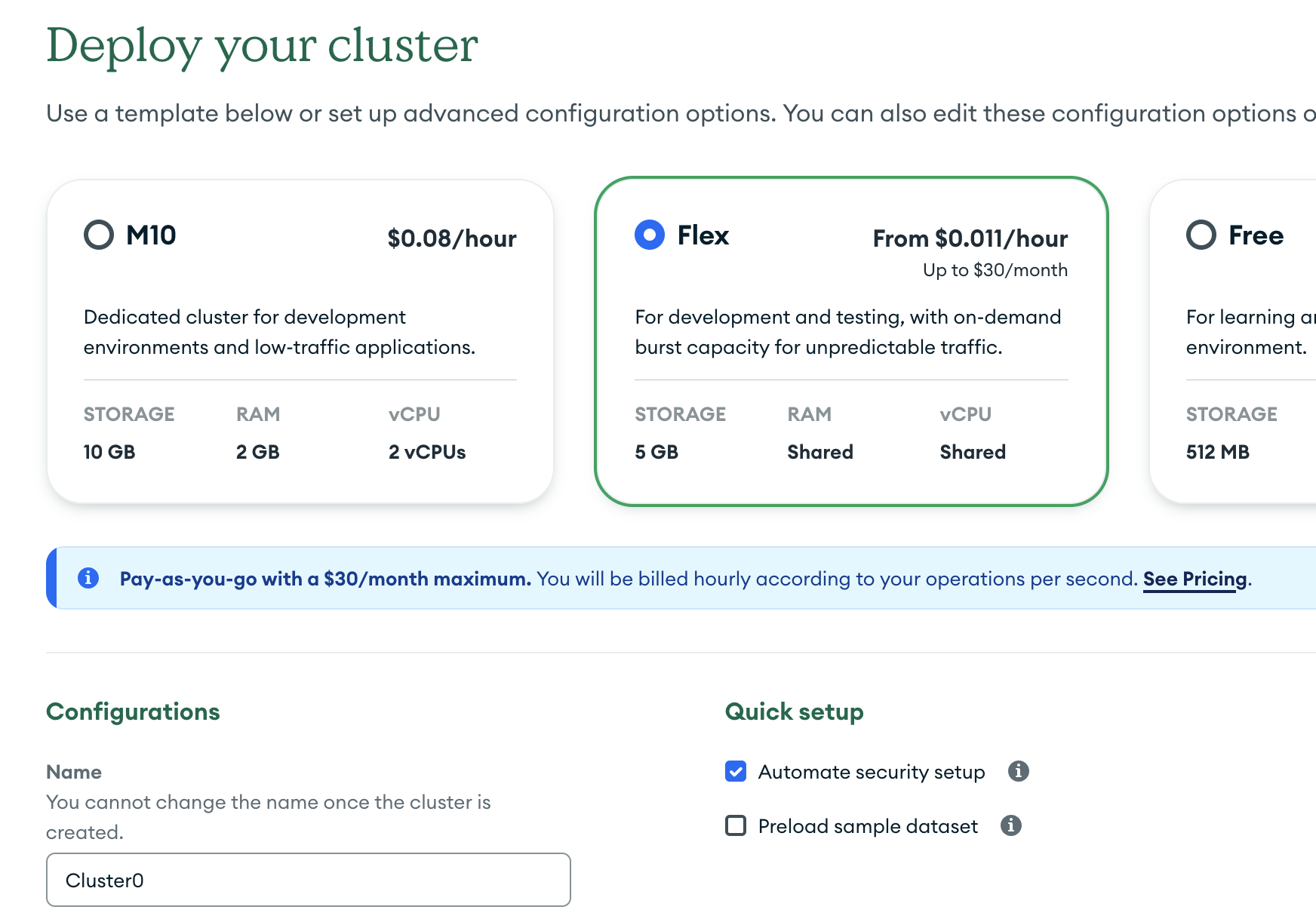
- 10GB storage with 2GB RAM and 2 vCPUs
- Fixed pricing at $0.08/hour
- Automatic scaling and backup features
- 24/7 support from MongoDB team
Cost Analysis
For a 30-day month, you’re looking at:
- Monthly cost: $57.60 (₹4,943 at current rates)
- Predictable billing – no surprises
- No setup costs or infrastructure management
Pros
- Zero maintenance – MongoDB handles everything
- Enterprise-grade security out of the box
- Built-in monitoring and alerting
- Easy scaling as your application grows
- Excellent uptime with SLA guarantees
Cons
- Higher cost for small applications
- Limited customisation options
- Vendor lock-in concerns
- Fixed resources regardless of actual usage
Best for: Production applications, teams without dedicated DevOps, businesses requiring reliability over cost optimization.
MongoDB Atlas Flex: The Budget-Friendly Option
What You Get
- Pay-as-you-use model starting from $0.011/hour
- Shared infrastructure with burst capacity
- Monthly cap of $30 maximum
- 5GB storage with shared RAM and CPU
- Automatic scaling during traffic spikes
Cost Analysis
- Minimum cost: $7.92/month (₹679) for basic usage
- Maximum cost: $30/month (₹2,574) – never exceeds this
- Average cost: ₹1,000-1,500 for typical development workloads
Pros
- Extremely cost-effective for variable workloads
- Burst capacity handles unexpected traffic
- Perfect for development and testing environments
- No upfront costs or commitments
- Easy to get started with minimal setup
Cons
- Shared resources can impact performance
- Limited to development workloads
- Unpredictable costs based on usage patterns
- Not suitable for production applications
Best for: Student projects, MVP development, testing environments, startups with tight budgets.
Self-Hosted MongoDB: The DIY Approach
What You Get
- Complete control over your database
- Custom configurations and optimizations
- No vendor restrictions or limitations
- Data sovereignty and privacy control
- Potential cost savings at scale
Cost Analysis
Infrastructure costs (AWS example):
- t3.small instance: ₹1,287/month
- Storage (50GB): ₹858/month
- Backup storage: ₹429/month
- Total infrastructure: ₹2,574/month
Hidden costs:
- Admin time: 15-20 hours/month
- Monitoring tools: ₹858-2,574/month
- Backup solutions: ₹429-1,287/month
- Total hidden costs: ₹2,000-5,000/month
Pros
- Maximum flexibility and customisation
- No recurring subscription fees
- Complete data control and ownership
- Optimised performance for specific use cases
- Compliance-friendly for sensitive data
Cons
- High operational overhead and complexity
- Requires skilled administrators and DevOps expertise
- Manual scaling and maintenance
- Security responsibilities fall on your team
- Potential downtime during issues or updates
- Hidden costs often exceed expectations
Best for: Large enterprises, teams with dedicated database administrators, applications with specific compliance requirements.
Real-World Scenarios
Scenario 1: Student Building a Portfolio App
Recommendation: MongoDB Atlas Flex
- Low traffic, development-focused
- Budget constraints are primary concern
- Expected cost: ₹500-1,000/month
Scenario 2: Startup with Growing User Base
Recommendation: Start with Flex, migrate to M10
- Begin with Flex for cost optimization
- Upgrade to M10 when consistent traffic develops
- Expected progression: ₹1,500 → ₹4,943/month
Scenario 3: Enterprise Application
Recommendation: M10 or Self-hosted (depending on scale)
- For single application: M10 for reliability
- For multiple applications: Self-hosted for cost efficiency
- Expected cost: ₹4,943/month (M10) or ₹5,000-10,000/month (self-hosted)
Performance Comparison
| Feature | M10 | Flex | Self-Hosted |
|---|---|---|---|
| Reliability | Excellent | Good | Depends on setup |
| Performance | Consistent | Variable | Optimisable |
| Scalability | Automatic | Limited | Manual |
| Security | Enterprise-grade | Good | Your responsibility |
| Support | 24/7 Professional | Community | DIY |
Final Verdict: Star Ratings
MongoDB Atlas M10 Cluster
⭐⭐⭐⭐⭐ 5/5 Stars
Why it wins: Perfect balance of reliability, performance, and ease of use. Yes, it’s expensive, but you get what you pay for – enterprise-grade database management without the headaches. For production applications and businesses that value time over money, this is the gold standard.
Quote: “Sometimes paying more upfront saves you lakhs in the long run through reduced downtime and faster development cycles.”
MongoDB Atlas Flex
⭐⭐⭐⭐☆ 4/5 Stars
Why it’s great: Unbeatable value for money, especially for Indian developers and startups. The monthly cap ensures you never get bill shock, and the pay-as-you-use model is perfect for variable workloads. Only loses a star because it’s not production-ready for high-traffic applications.
Quote: “The perfect stepping stone for developers who want professional database management without breaking the bank.”
Self-Hosted MongoDB
⭐⭐⭐☆☆ 3/5 Stars
Why it’s average: While it offers maximum control and can be cost-effective at scale, the operational complexity and hidden costs make it suitable only for teams with proper expertise. Great for learning and large-scale deployments, but not for most Indian developers who prefer to focus on building applications rather than managing infrastructure.
Quote: “A powerful option that demands respect – and a dedicated team to handle it properly.”
Bottom Line
For most Indian developers and startups, MongoDB Atlas Flex offers the best value proposition. Start there, understand your usage patterns, and then decide whether to upgrade to M10 or explore self-hosting based on your growth and requirements.
Remember, the cheapest option isn’t always the most cost-effective when you factor in development time, potential downtime, and the opportunity cost of not focusing on your core business.
Pro tip: Many successful Indian startups follow the “Flex → M10 → Self-hosted” progression as they scale. Start small, grow smart, and optimize when you have the resources and expertise to do so effectively.