
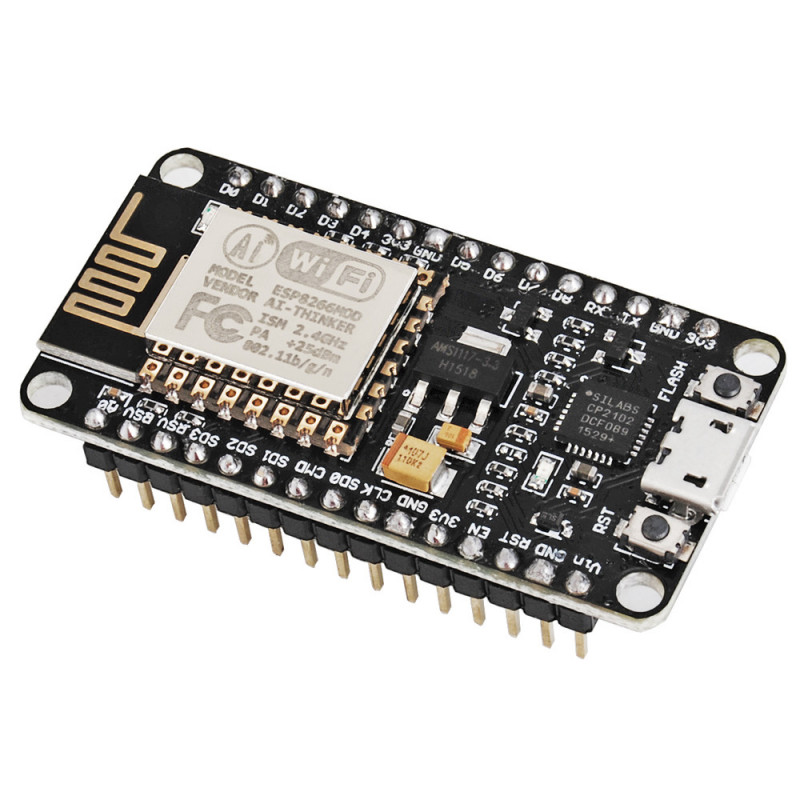
The NodeMCU is a popular low-cost WiFi-enabled microcontroller board that is often used for building IoT (Internet of Things) projects. It is based on the ESP8266 WiFi chip, which provides a way to connect microcontroller projects to the internet. The NodeMCU version of the ESP8266 adds additional functionality, such as a micro-USB port for programming and debugging, as well as a number of useful libraries for everyday tasks like networking and interfacing with sensors. It is a powerful and versatile platform that can be used for a wide range of applications.
To program the ESP8266 NodeMCU, you will need a computer with a USB port and a USB cable, as well as a software development environment that supports the ESP8266. The NodeMCU board can be programmed using the Arduino IDE, which is a popular open-source platform that supports a wide range of microcontrollers and boards.
To get started, follow these steps:
- Install the Arduino IDE on your computer. You can download it from the Arduino website (https://www.arduino.cc/en/Main/Software)
- Connect the NodeMCU board to your computer using the USB cable.
- Open the Arduino IDE and select the correct board and port. To do this, go to the “Tools” menu and choose the “NodeMCU 1.0 (ESP-12E Module)” board from the “Board” menu, and choose the correct port from the “Port” menu.
- In the Arduino IDE, create a new sketch (program) by going to the “File” menu and selecting “New”.
- Write your program using the Arduino programming language, which is based on C++. There are many online resources and tutorials available to help you learn the basics of the Arduino language.
- Once you have written your program, you can upload it to the NodeMCU board by clicking the “Upload” button in the Arduino IDE. The program will be compiled and then transferred to the board, where it will be executed.
- You can use the built-in serial monitor in the Arduino IDE to send and receive data from the NodeMCU board, which can be useful for debugging and testing your program.
Overall, programming the ESP8266 NodeMCU is similar to programming any other microcontroller using the Arduino IDE. With a little bit of practice and some experimentation, you should be able to get started building your own IoT projects with the NodeMCU.